Review lists through the links below. This will help situate the most important reasons why you may feel emotionally distressed from living with epilepsy.
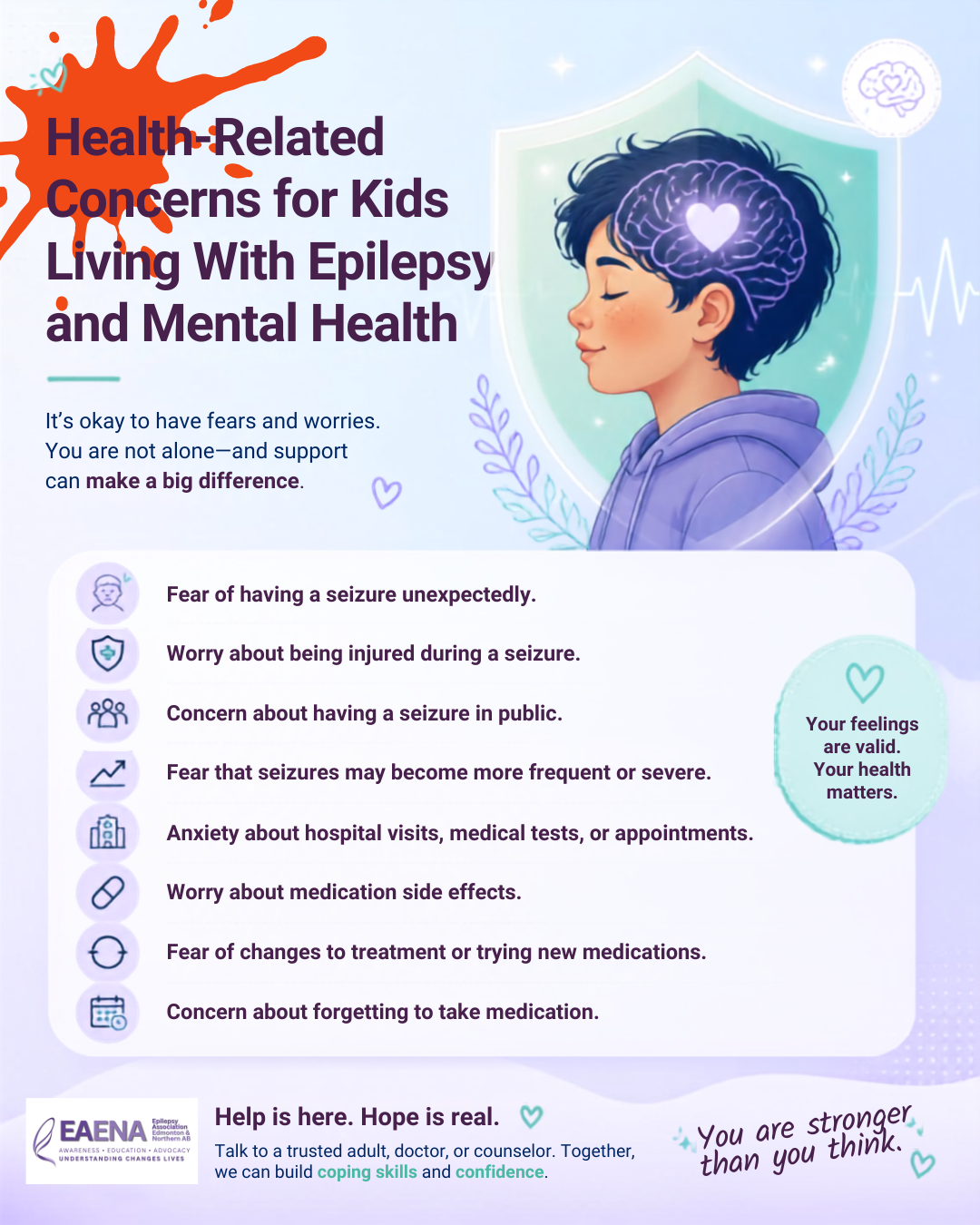
Health-Related Concerns for Kids Living With Epilepsy and Mental Health
This list contains suggestions of concerns that may raise from living with epilepsy – related to the health condition and ways it can impact quality of life (QOL).
These include:
Fear of having a seizure unexpectedly.
Worry about being injured during a seizure.
Concern about having a seizure in public.
Fear that seizures may become more frequent or severe.
Anxiety about hospital visits, medical tests, or appointments.
Worry about medication side effects.
Fear of changes to treatment or trying new medications.
Concern about forgetting to take medication.
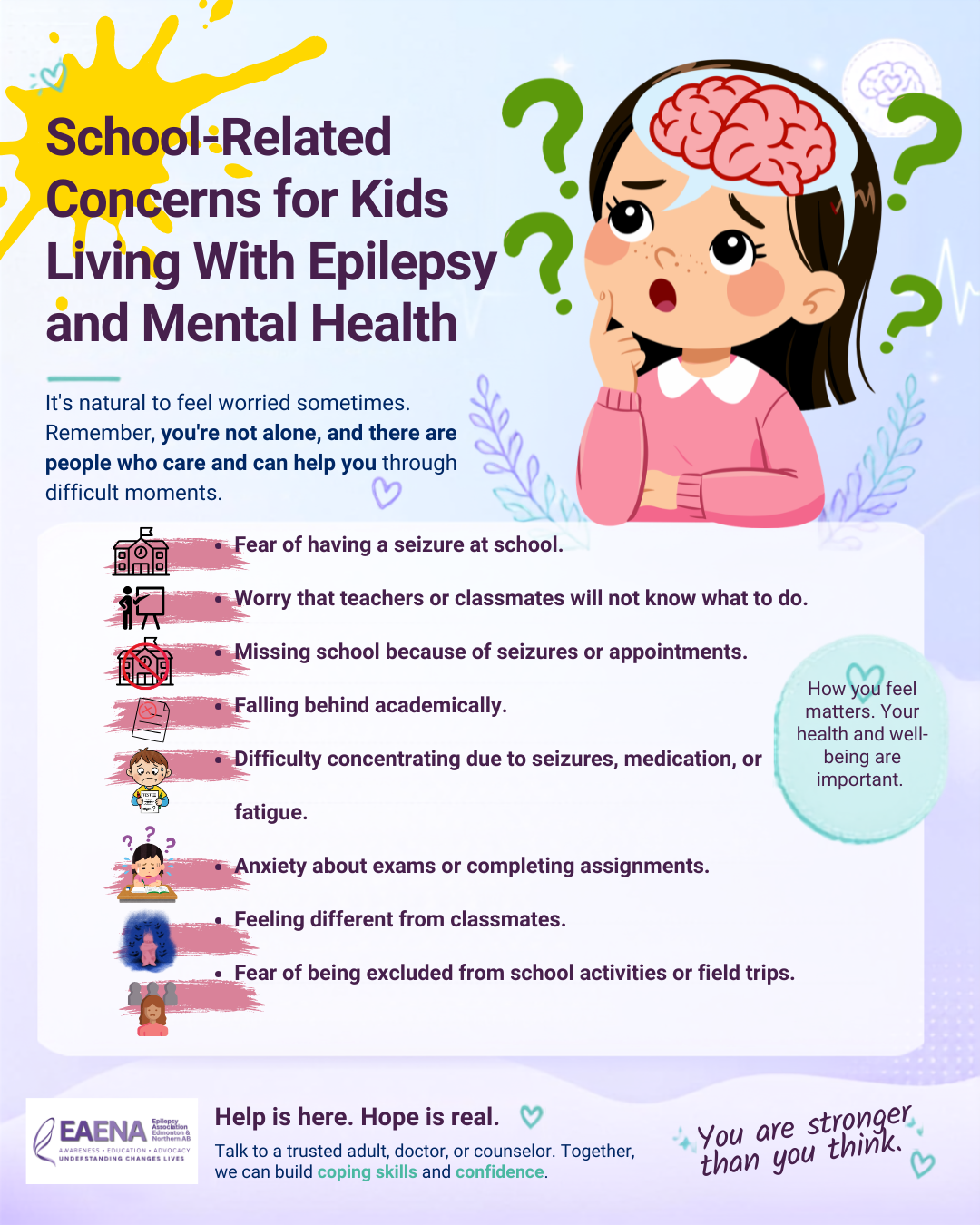
School-Related Concerns for Kids Living With Epilepsy and Mental Health
This list contains suggestions of concerns that may raise from living with epilepsy – and challenges that may raise in school settings.
These include:
Fear of having a seizure at school.
Worry that teachers or classmates will not know what to do.
Missing school because of seizures or appointments.
Falling behind academically.
Difficulty concentrating due to seizures, medication, or fatigue.
Anxiety about exams or completing assignments.
Feeling different from classmates.
Fear of being excluded from school activities or field trips.
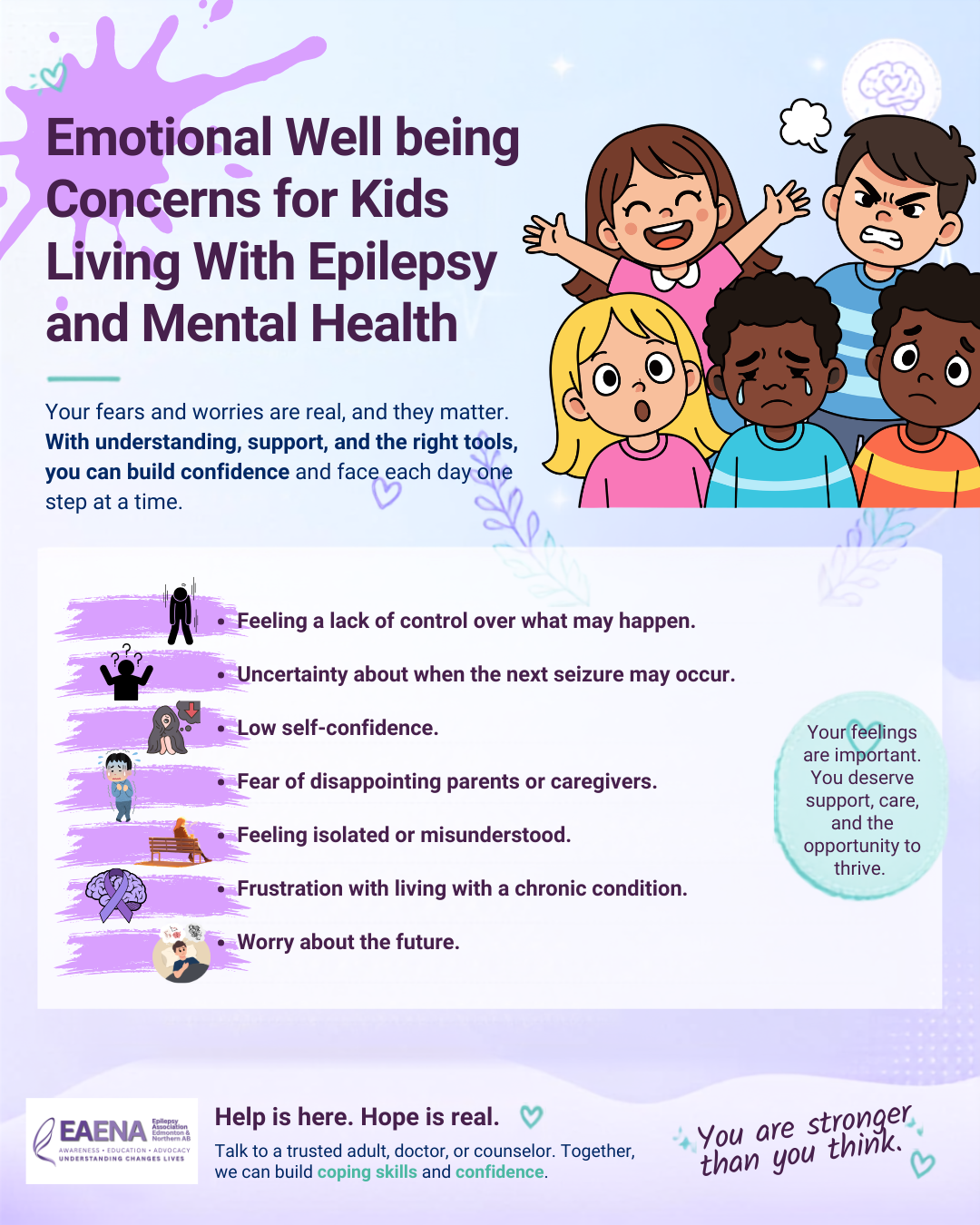
Emotional Well being Concerns for Kids Living With Epilepsy and Mental Health
This list contains suggestions of concerns that may raise from living with epilepsy – and how that may impact general emotional well being.
These include:
Feeling a lack of control over what may happen.
Uncertainty about when the next seizure may occur.
Low self-confidence.
Fear of disappointing parents or caregivers.
Feeling isolated or misunderstood.
Frustration with living with a chronic condition.
Worry about the future.
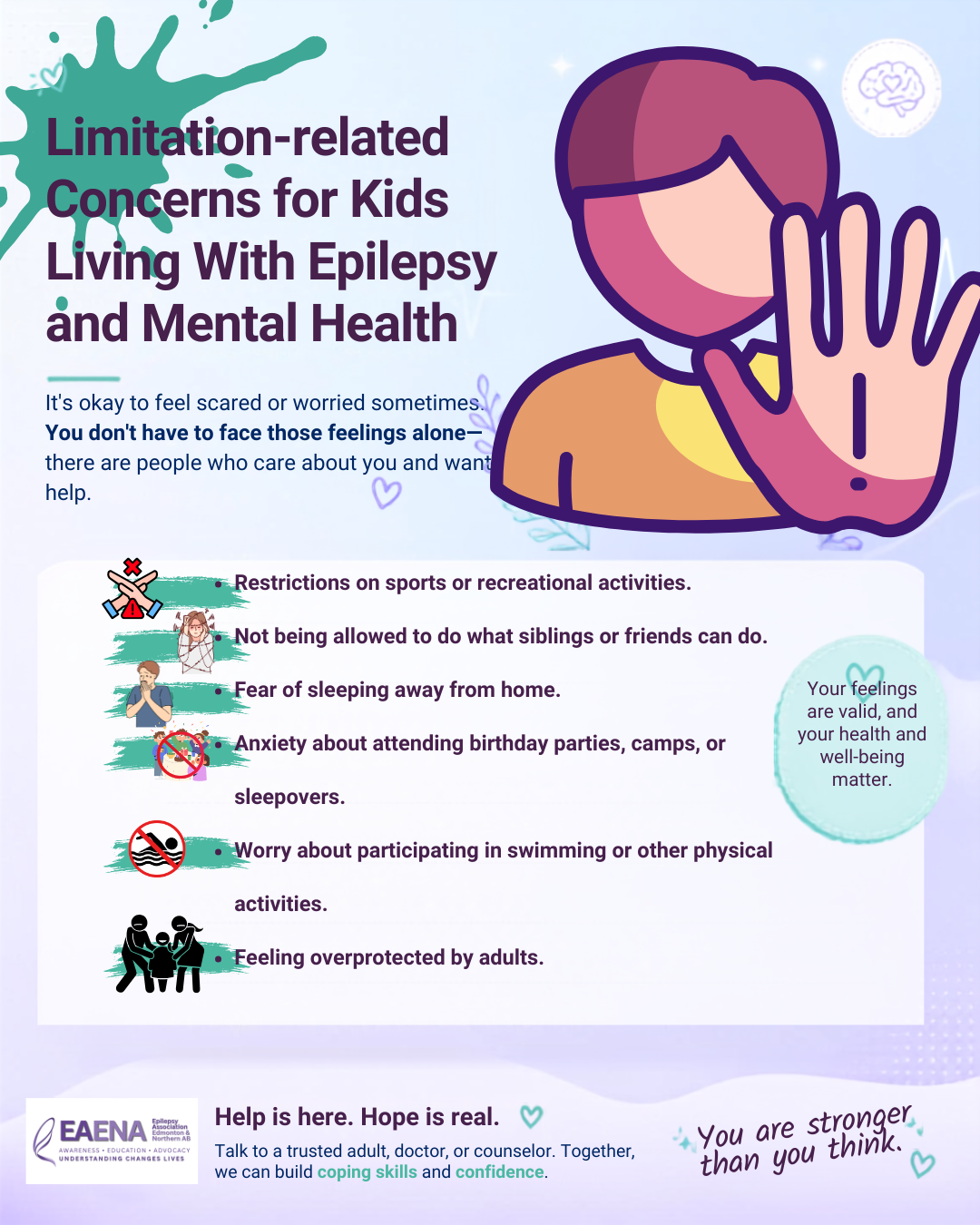
Limitation-related Concerns for Kids Living With Epilepsy and Mental Health
This list contains suggestions of concerns that may raise from living with epilepsy – related limitations in activities and sports.
These include:
Restrictions on sports or recreational activities.
Not being allowed to do what siblings or friends can do.
Fear of sleeping away from home.
Anxiety about attending birthday parties, camps, or sleepovers.
Worry about participating in swimming or other physical activities.
Feeling overprotected by adults.
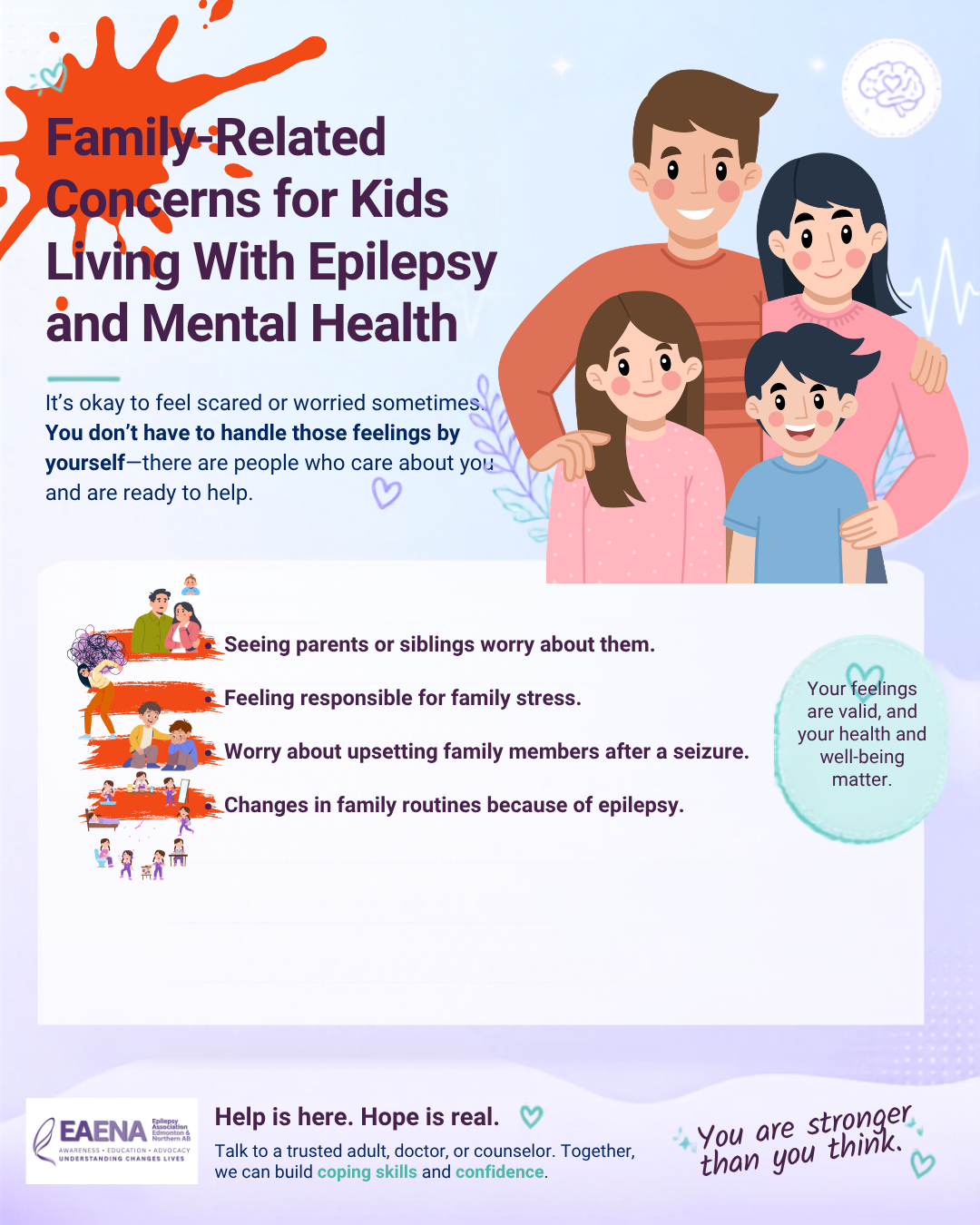
Family-Related Concerns for Kids Living With Epilepsy and Mental Health
This list contains suggestions of concerns that may raise from living with epilepsy – related to family life.
These include:
Seeing parents or siblings worry about them.
Feeling responsible for family stress.
Worry about upsetting family members after a seizure.
Changes in family routines because of epilepsy.
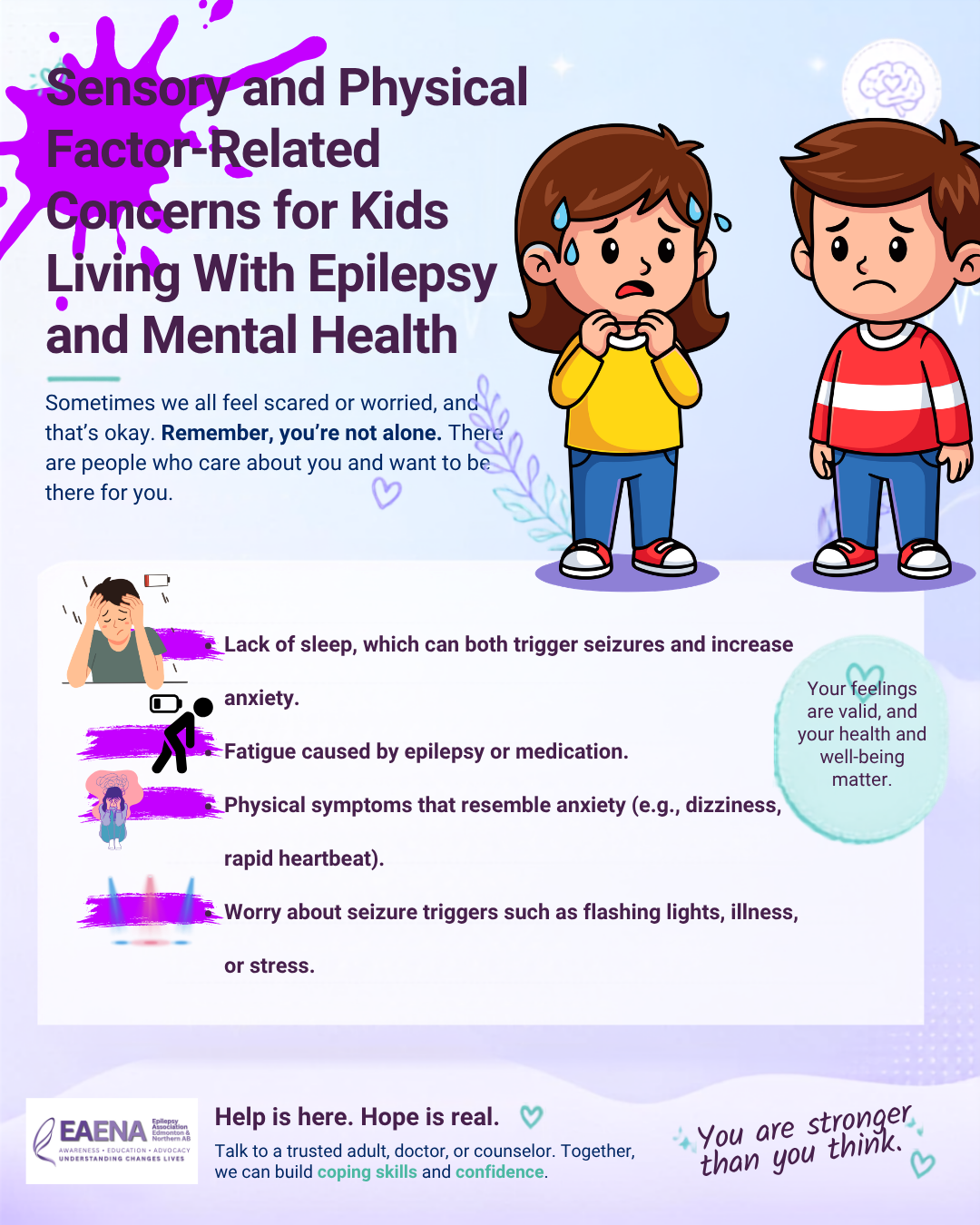
Sensory and Physical Factor-Related Concerns for Kids Living With Epilepsy and Mental Health
This list contains suggestions of concerns that may raise from living with epilepsy – impacting sensory and physical elements of life.
These include:
Lack of sleep, which can both trigger seizures and increase anxiety.
Fatigue caused by epilepsy or medication.
Physical symptoms that resemble anxiety (e.g., dizziness, rapid heartbeat).
Worry about seizure triggers such as flashing lights, illness, or stress.
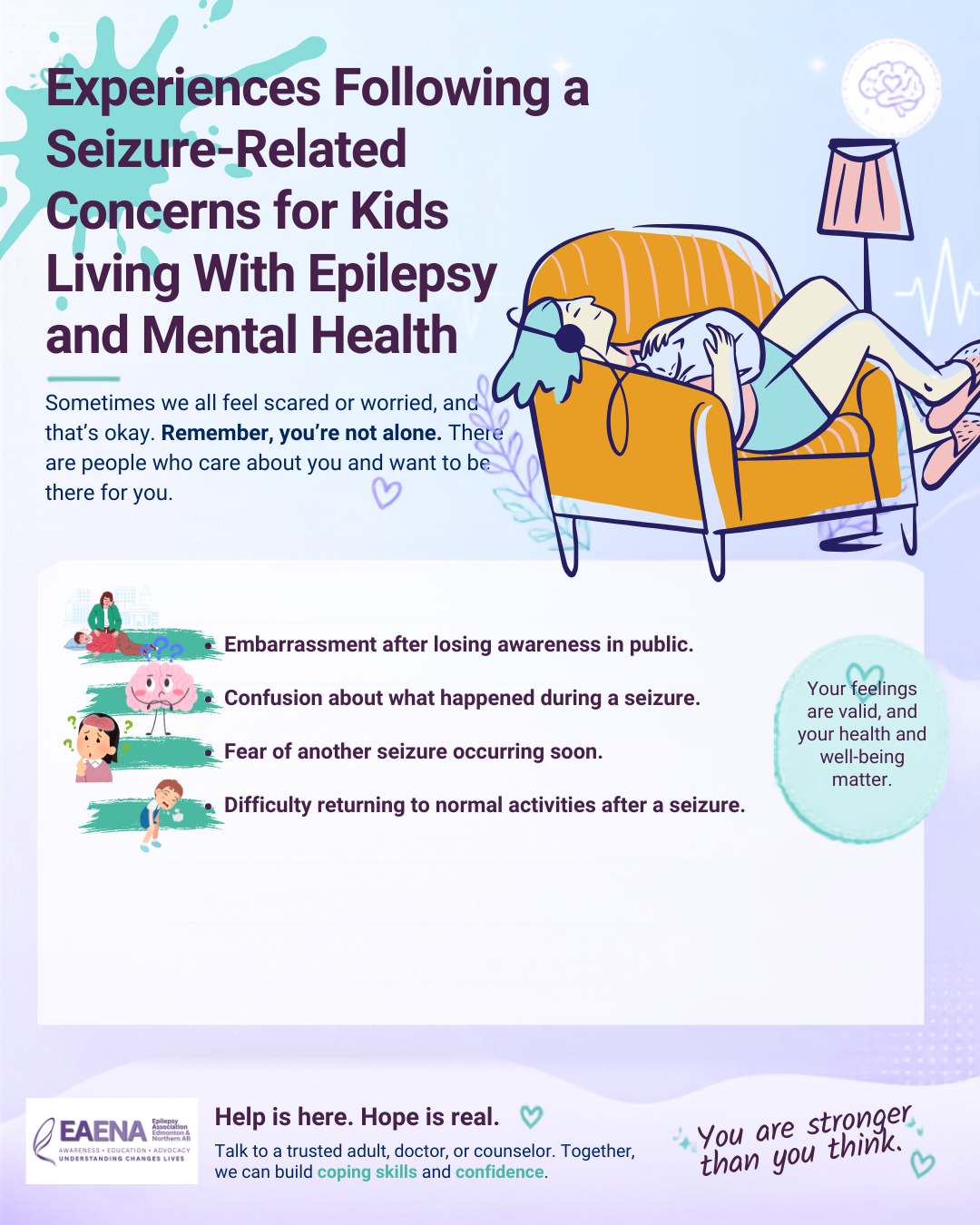
Experiences Following a Seizure-Related Concerns for Kids Living With Epilepsy and Mental Health
This list contains suggestions of concerns that may raise from living with epilepsy stemming from after-seizure events.
These include:
Embarrassment after losing awareness in public.
Confusion about what happened during a seizure.
Fear of another seizure occurring soon.
Difficulty returning to normal activities after a seizure.
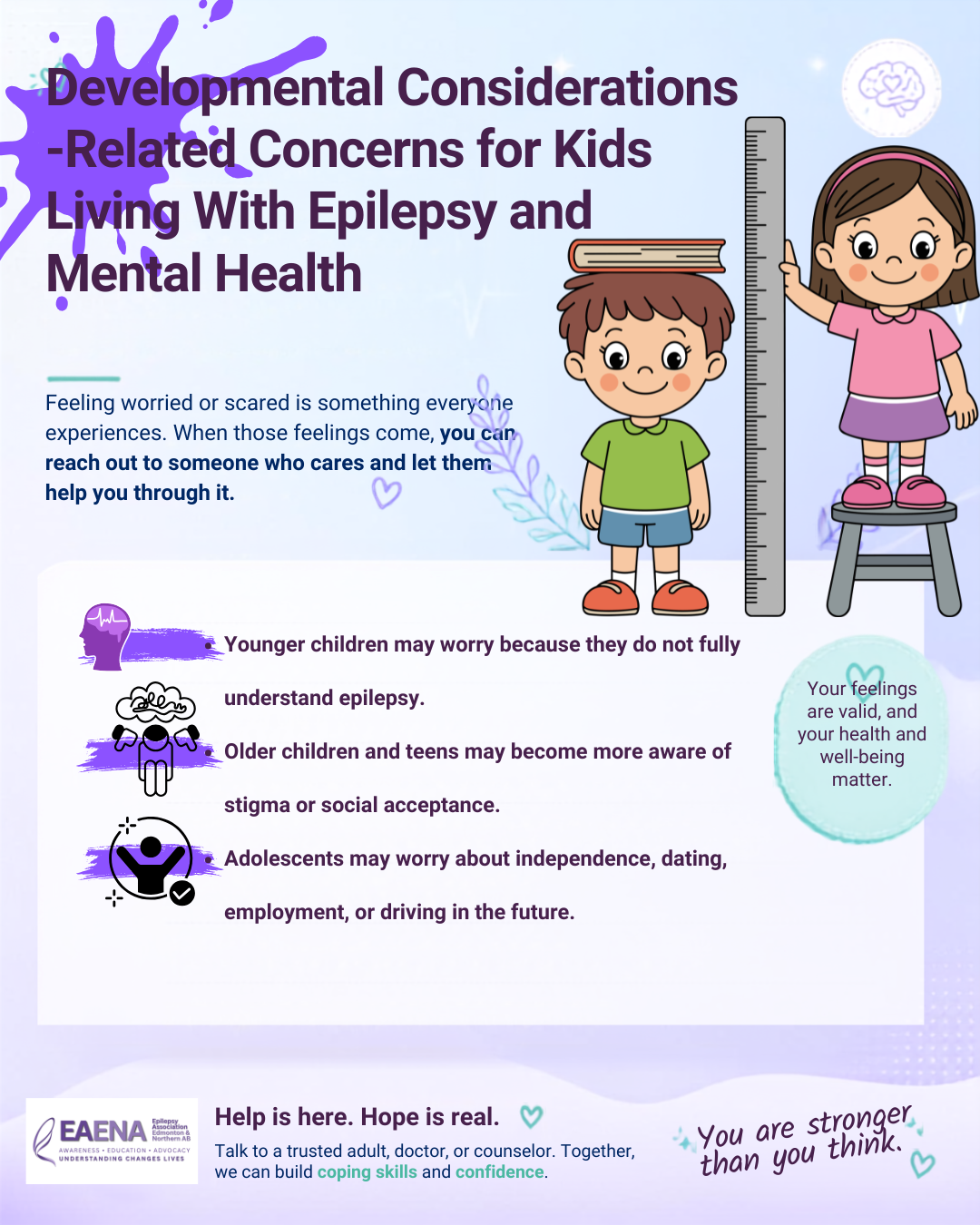
Developmental Considerations -Related Concerns for Kids Living With Epilepsy and Mental Health
This list contains suggestions of concerns that may raise from living with epilepsy and impacting children’s development.
These include:
Younger children may worry because they do not fully understand epilepsy.
Older children and teens may become more aware of stigma or social acceptance.
Adolescents may worry about independence, dating, employment, or driving in the future.