

This page provides links to online articles and resources that address epilepsy, mental health, and the challenges children with epilepsy face as they grow up. Each link includes a brief description of the content, access to the original source, and insights into key research findings in the field.
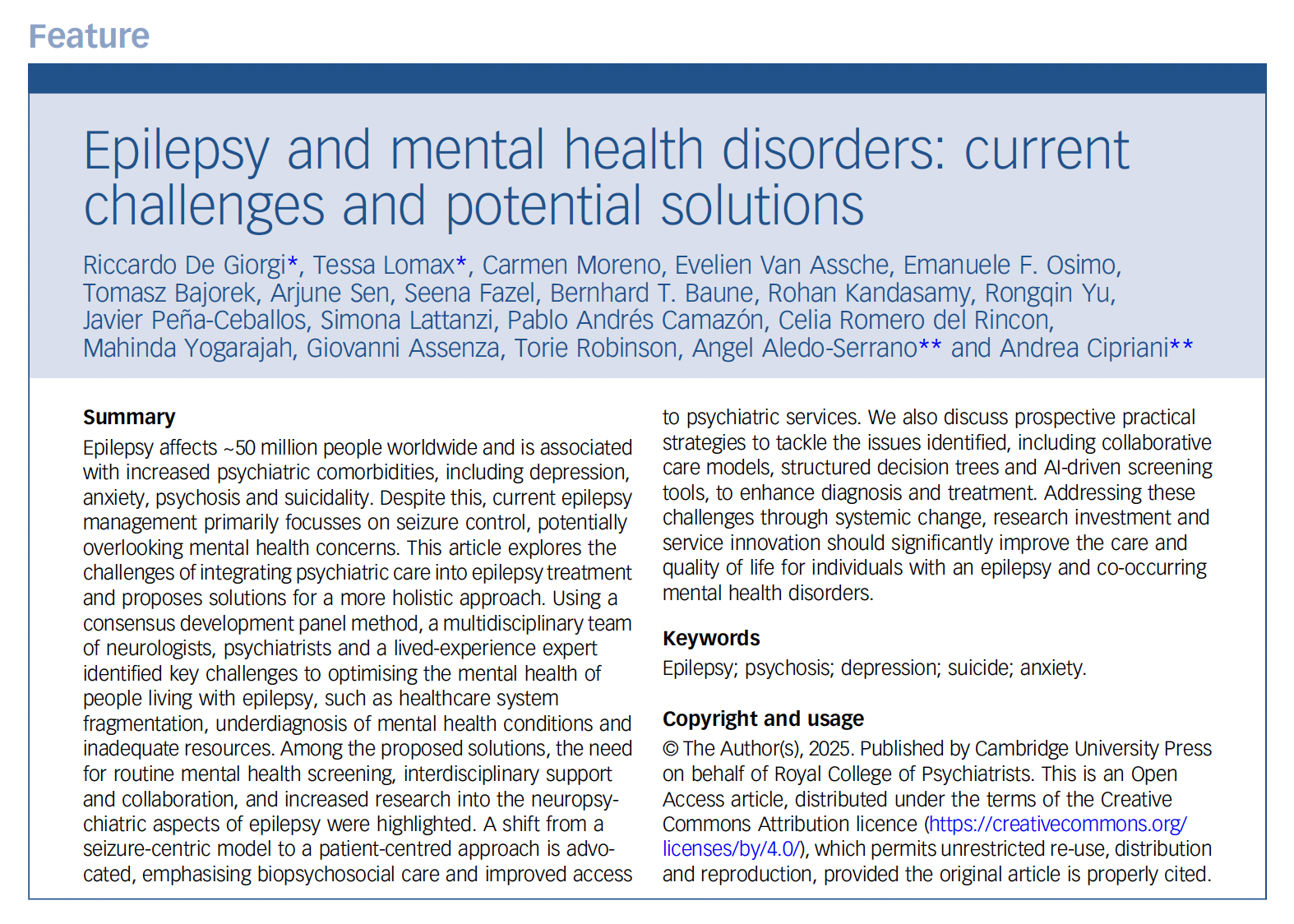
Challenges in Epilepsy and Mental Health Care
This document discusses the challenges and potential solutions for integrating mental health care into the treatment of epilepsy, emphasizing the need for a holistic approach.
Click on the image to access the full article – click on “Expand for more” to read a summary.
Epilepsy affects approximately 50 million people globally and is often accompanied by psychiatric comorbidities such as depression, anxiety, psychosis, and suicidality.
- Current management primarily focuses on seizure control, neglecting mental health issues, which can significantly impact quality of life.
- Key challenges include healthcare system fragmentation, underdiagnosis of mental health conditions, and inadequate resources for comprehensive care.
- The literature on neuropsychiatric symptoms in epilepsy is limited, often focusing on specific populations or age groups, which hinders broader understanding and treatment.
Proposed Solutions for Holistic Care
- A shift from a seizure-centric model to a patient-centered approach is essential, advocating for biopsychosocial care that includes routine mental health screenings.
- Interdisciplinary collaboration between neurologists and psychiatrists is crucial for integrated care, with recommendations for developing collaborative care models and expanding neuropsychiatry services.
- Enhanced education and training for healthcare professionals on recognizing and managing co-occurring psychiatric conditions in epilepsy are necessary.
- The use of artificial intelligence tools for screening and risk assessment can support healthcare providers in identifying patients needing specialized mental health care.
Practical Strategies for Implementation
- Establishing multidisciplinary teams (MDTs) that include neurologists, mental health professionals, and primary care providers can facilitate comprehensive care.
- Clear protocols for case management and referrals, as well as defined roles within the MDT, are vital for effective collaboration.
- Involving individuals with lived experience in service design and using Patient Reported Outcome Measures can ensure that care is patient-centered and addresses real needs.
- Addressing practical barriers, such as resource limitations and access to mental health services, is critical for improving care delivery.
Research Gaps and Future Directions
- There is a pressing need for more research on the neuropsychiatric aspects of epilepsy, including the bidirectional relationship between epilepsy and mental health disorders.
- Identifying research priorities and fostering collaboration between mental health and epilepsy specialists can enhance understanding and treatment efficacy.
- The integration of patient and public involvement in research is essential to ensure that studies address the needs of those affected by epilepsy and mental health issues.
Conclusion
- The current focus on seizure control in epilepsy care overlooks the significant impact of co-occurring psychiatric disorders.
- A holistic approach that incorporates mental health care is necessary to improve the overall well-being and quality of life for individuals with epilepsy.
Systemic changes, increased research investment, and innovative service delivery models are required to address the challenges identified and enhance patient care.
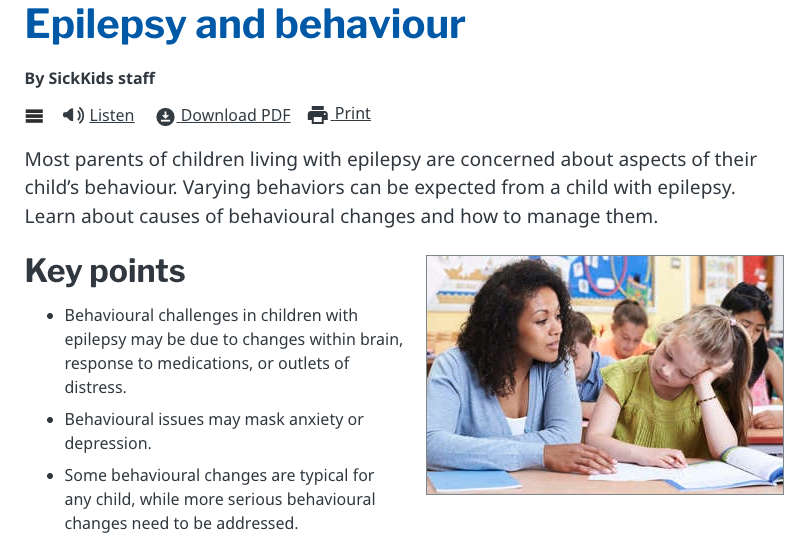
Epilepsy and Behaviour
This website page offers insights on how epilepsy may affect your child’s behaviour.
Epilepsy affects more than just seizure control — it can influence a child’s emotions, attention, and behaviour. Understanding triggers, maintaining open communication with healthcare providers, and teaching coping skills are essential for managing both mild and serious behavioural changes.
Click on the image to access the page – click on “Expand for more” to read a summary.
Summary: Epilepsy and Behaviour in Children
Children with epilepsy often experience behavioural challenges due to brain changes, seizures, medication effects, and the emotional impact of living with a chronic condition. These behaviours may include inattentiveness, irritability, hyperactivity, aggression, or emotional outbursts, and can sometimes signal underlying anxiety or depression.
Causes of Behavioural Changes
Changes or dysfunction in brain areas involved in emotion and behaviour
Seizures or abnormal brain activity
Stress and unpredictability of seizures
Side effects of anti-epileptic medications (e.g., levetiracetam, valproate, phenobarbital)
Emotional or social challenges related to living with epilepsy
ADHD is especially common—about one-third of children with epilepsy meet criteria, often the inattentive subtype.
Seizure-Related Behaviour
Children may show mood or behavioural changes before or after seizures. Tracking patterns can help distinguish seizure-related behaviours from those that require behaviour modification.
Medication-Related Behaviour
Some anti-epileptic drugs can worsen behaviour, while others may improve it. Sudden irritability, aggression, or mood changes may suggest a medication effect and should be discussed with the neurologist.
Minor Behaviour Issues
Typical child behaviours (tantrums, irritability) may be amplified by epilepsy-related stress, frequent medical visits, or feeling unwell. Parents can help by:
Observing the child’s experience and emotions
Using age-appropriate, consistent consequences
Staying calm and helping the child co-regulate
Modeling coping skills and labeling emotions
Serious Behavioural Changes
A small number of children may have sudden, intense episodes of verbal or physical aggression. These may be linked to abnormal brain activity, medication effects, or sensory triggers. Patterns often include:
A trigger (e.g., loud noises)
A rapid escalation the child feels unable to control
Regret or remorse afterward
How to Support Serious Behaviour Challenges
Identify triggers and remove the child or the trigger early
Stay calm and use simple, self-regulation language
Avoid reasoning or lecturing during the outburst
Discuss what happened afterward and develop coping strategies
Enforce natural consequences
Seek professional support when necessary (psychologist, psychiatrist)
Maintain communication with the school
If safety is at risk, call for emergency help
The Intersection of Epilepsy and Psychiatric Disorders
- 4 million Americans have epilepsy, of which 25-50% have associated psychiatric comorbidity which are common and complex.
- The most common are the mood and anxiety disorders
- Timing of psychiatric symptoms:
- Peri-ictal ( preictal, ictal, postictal <1-5 days after attack>)
Usually not investigated
Require seizure free state for control
e.g: ictal panic that differs from a real panic attack
postictal symptoms<1-5 days after attack>: depression, suicide, psychosis, anxiety, cognitive symptoms.
- Interictal
- Similar to people without epilepsy
- Recognized
- Require pharmacotherapy and psychotherapy
- Iatrogenic by treatment (pharmaco, surgical)
- Anticipated if psychiatric profile of the patient is available.
- Happens if choosing a drug with negative psychotropic properties or withdrawing a drug with positive psychotropic properties.
- Change Rx if possible
- Psychiatric disorders can happen before diagnosis of Epilepsy, at the same time of diagnosis or after the diagnosis , that is why it is important for a neurologist to evaluate the patient’s psychiatric history and family history.
- Impact of depression and anxiety on epilepsy patients:
- High mortality
- Suicide
- Premature death: accidents, overdose of RX
- Worse tolerance for epileptic treatment
- Worse quality of life especially in intractable epilepsy patients
- High rate of iatrogenic adverse effects
- Worse seizure control with pharmacology
- Bidirectional relation between epilepsy and depression due to common mediating factors
- Rates of most of psychiatric conditions are greater in epilepsy patients than in general population
- Identification of epileptic patients is easy using screening tools:
Depression – NDDIE – score over 15
Anxiety – GAD-7 – score over 10
Treatment :
- Antidepressants are safe with people with epilepsy
- Pharmacotherapy
- CBT
- both
Coping with Mental Health and Epilepsy in the Teen Years, by Dr. S. Lebeuf and Dr. Erin Auld
This presentation by Dr. Lebeuf and Dr. Auld, covers topics surrounding mental health concerns for youth living with epilepsy. A must see to begin to understand the implications of this specific epilepsy population and how to address their challenges.
Moods and Behaviour
This page created by the Epilepsy Foundation, hosts text and a link to a video presentation, by Dr. Orrin Devinsky, about mood and behaviour issues that may occur in people living with epilepsy, at all ages.
Click on the image to access the page – click on “Expand for more” to read a summary.
Mood Disorders
Many people with epilepsy experience uncomfortable or distressing changes in their emotions. The link between epilepsy and mood disorders has been recognized for over 2,000 years, although the exact relationship between seizures and mood changes has only recently become better understood.
Why Mood Disorders Matter
Mood disorders are common in people with epilepsy and can significantly affect daily functioning and overall quality of life. These emotional changes may occur most of the time or appear just before, during, or after a seizure. Some people experience depression, while others may become irritable or anxious.
The most common mood disorders seen in epilepsy are major depression and dysthymia. Milder forms of depression can also affect quality of life and often respond well to treatment.
Anxiety—though not technically a mood disorder—is another frequent concern for people with epilepsy.
Because these conditions can deeply influence well-being, it is important for individuals with epilepsy, their families, and their healthcare providers to understand how to recognize and address mood disorders.
Recognizing Mood Disorders
Many people with epilepsy experience emotional challenges. You may have a mood disorder if you regularly feel depressed, anxious, irritable, fearful, panicked, or emotionally distressed without another clear medical explanation.
Learning how to recognize these symptoms, understanding the risks of leaving them untreated, and knowing how to communicate them to your healthcare provider are important steps toward getting help.
You Are Not Alone
Find a Support Group
Connecting with others who understand what you’re going through can help reduce feelings of isolation and provide encouragement.
Do You Need Treatment?
Everyone experiences occasional sadness, irritability, or anxiety. However, treatment may be necessary if these symptoms:
Last a long time
Become severe
Interfere with your relationships, work, or daily activities
What you can do:
Talk to your doctor. Tell the provider who manages your epilepsy—your family doctor, internist, or neurologist—about your symptoms. Explain how often they occur, how they feel, and how long they last.
Track your symptoms. Bring a calendar or journal that documents your moods, just as you might track your seizures.
Ask about the connection to epilepsy. Discuss whether your symptoms could be related to your seizures or medications.
Include your mental health providers. If you are seeing a counselor or psychiatrist, let them know how you’ve been feeling so they can help decide whether any treatment changes are needed.
Together, you and your healthcare team can determine whether you would benefit from treatment for a mood disorder.
Treatments for Mood Disorders
There are several effective treatments for mood disorders in people with epilepsy. Psychotherapy and medication are the primary approaches, and they may be used alone or in combination. The goal is to reduce or eliminate symptoms and improve quality of life.
Medication
The most common medications used to treat depression are antidepressants. Doctors often begin with a selective serotonin reuptake inhibitor (SSRI), although other types are available.
Important points to remember:
Antidepressants may take several weeks to become fully effective.
Doses may need to be adjusted over time.
As with anti-seizure medications, some people may need to try more than one antidepressant before finding the best fit.
Many people with epilepsy respond well to low doses.
Counseling
Several types of counseling can be helpful in managing mood disorders:
Traditional psychotherapy: Helps individuals understand their feelings, identify contributing factors, and learn strategies for change.
Psycho-educational therapy: Educates patients and families about moods, behaviors, and effective coping strategies.
Family therapy: Involves the person with epilepsy and their family, addressing relationship dynamics that may affect or be affected by mood problems.
Cognitive Behavioural Therapy (CBT): Helps people learn new ways of thinking about challenges and develop healthier responses and coping skills.
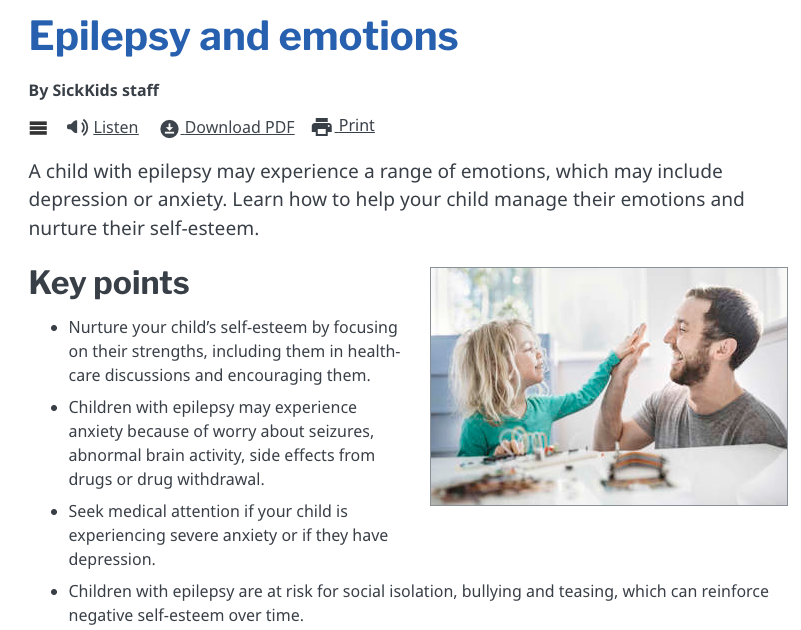
Epilepsy and Emotions
Children with epilepsy often face emotional challenges such as low self-esteem, anxiety, and depression. These issues may stem from seizure unpredictability, social stigma, medication side effects, and feelings of difference from peers.
Click on the image to access the page – click on “Expand for more” to read a summary.
Self-Esteem
- Children may internalize limitations and negative messages about their condition.
- Parents can help by showing love, encouraging independence, focusing on strengths, involving children in care decisions, fostering social inclusion, and seeking professional help when needed.
Anxiety
- Affects 23–33% of children with epilepsy.
- Caused by worry about seizures, abnormal brain activity, or medication effects.
- Signs include tension, avoidance, constant reassurance-seeking, and perfectionism.
- Supportive discussion, counselling, and sometimes medication can help.
Depression
- Affects 10–26% of children with epilepsy (higher than general population).
- Risk factors: frequent seizures, long illness duration, family history, and stress.
- Symptoms: sadness, irritability, withdrawal, poor performance, hopelessness, suicidal thoughts, or physical complaints.
- Treatment: therapy, antidepressants, and mental health referral if severe.
Key message:
Emotional wellbeing is as important as seizure control. Parents and caregivers play a crucial role by promoting self-esteem, encouraging open communication, and seeking timely professional support for anxiety or depression.
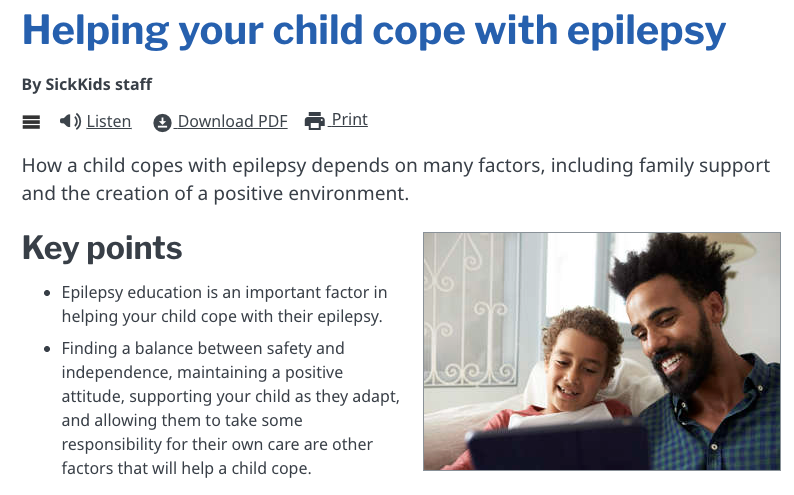
Helping your child cope with epilepsy
How a child copes with epilepsy depends on many factors, including family support and the creation of a positive environment.
Click on the image to access the page – click on “Expand for more” to read a summary.
- Education and Understanding
- Teaching your child about epilepsy in an age-appropriate way reduces fear and misconceptions.
- Encourage open communication and involve them in discussions with the epilepsy care team.
- Emotional and Social Support
- Children with epilepsy may experience anxiety, low self-esteem, or social isolation.
- Parents’ positive attitudes strongly influence how children view their epilepsy.
- Maintain normal family routines and encourage participation in regular activities.
- Balancing Safety and Independence
- Parents often struggle between ensuring safety and allowing independence.
- Discuss activity restrictions with the care team and promote typical peer interaction.
- Adapting to Change and Building Self-Esteem
- Help children focus on what they can do, not just their limitations.
- Encourage interests, play, and self-expression to build confidence and resilience.
- Social Interaction and School Support
- Teach your child how to explain epilepsy to others.
- Work with teachers to prevent bullying and educate peers.
- Support opportunities for your child to connect with others who have epilepsy.
- Medical Procedures and Self-Care
- Prepare your child for medical tests using coping strategies (e.g., distraction, numbing cream).
- Gradually increase your child’s responsibility for medication and self-care as they mature.
- Behaviour and Daily Life
- Treat your child as normally as possible; use consistent rules and reinforcement.
- Understand that seizures, medication, or frustration may affect behaviour.
- Creating a Supportive Environment
- Make the home safe and advocate for your child at school and in the community.
- Encourage social connections and participation in support groups or camps.
- Supporting Teenagers
- Teens may struggle with independence, peer acceptance, and treatment adherence.
- Offer empathy, reinforce strengths, and support responsible self-management.
The Effects of Surgery on the Development and Lives of Children with Epilepsy, by Dr. Snyder
Dr. Snyder offers us a number of considerations about how epilepsy impacts the lives of children with this neurological disease.
Childhood Epilepsy: Mental Health and Behaviour
Children with epilepsy are at significantly higher risk (5×) for mental health and behavioral problems, affecting 30–50% of cases. Issues include depression, anxiety, ADHD, aggression, and, in some cases, autism. Causes are both internal (brain structure/function, seizure type, limbic involvement) and external (social stigma, family response, self-esteem, and medication side effects).
Click on the image to access the page – click on “Expand for more” to read a summary.
Early identification and intervention are critical. Effective management typically combines medications (e.g., antidepressants, stimulants) and cognitive/behavioral therapies, including talk therapy. Care requires coordination among specialists—neurologists, psychiatrists, psychologists, and social workers—to tailor treatment, monitor medication interactions, and support the child’s understanding and social integration.
Key points:
- Epilepsy increases risk of behavioral/mental health issues.
- Common issues: depression, anxiety, ADHD, aggression, autism spectrum traits.
- Early evaluation and treatment improve outcomes.
- Family support and education are vital.
- Medications must be carefully managed due to interactions.
Anxiety Disorders in Children with Epilepsy
Anxiety disorders are the most common psychiatric disorder in childhood and are often underdiagnosed in typically developing children and in those with epilepsy. Anxiety disorders in children with epilepsy can have a negative impact on child functioning and quality of life. It is important to screen for anxiety symptoms and refer to mental health specialists for diagnosis and treatment as appropriate. There is mounting evidence that a number of youth who develop anxiety disorders actually experienced some of these symptoms prior to the onset of their seizures. Therefore, it is important to begin asking and assessing for anxiety disorders and other emotional struggles at the youth’s first appointments following diagnosis of epilepsy.
Click on the image to access the full article – click on “Expand for more” to read a summary.
- Prevalence & Impact: Anxiety disorders are the most common psychiatric disorders in children and are often underdiagnosed, especially in children with epilepsy. They negatively affect functioning and quality of life. Anxiety can precede seizures in some children.
- Symptoms: May differ from adults and include crying, irritability, tantrums, worry, inattention, and negativity. Types include generalized anxiety, separation anxiety, social phobia, specific phobia, and panic disorder.
- Epilepsy-Related Considerations: Anxiety may stem from neural dysfunction, seizure-related fears, family history, side effects of antiepileptic drugs, lifestyle changes, or parental anxiety.
- Epidemiology: Anxiety rates are higher in children with epilepsy (up to 35.8%). Younger age of onset and polytherapy may predict anxiety; gender and epilepsy duration do not.
- Diagnosis: Requires input from parents, children, and teachers. Screening tools include SDQ (ages 2+) and SCARED (ages 8+). Observation of behavioral changes and physical complaints is also useful.
- Treatment: Early intervention improves outcomes. Options include cognitive behavioral therapy (CBT), SSRIs/SNRIs (safe for seizure threshold), combination therapy, support groups, and school accommodations through IEP/504 plans.
Websites on anxiety which may be helpful to children, teens and parents: https://my.clevelandclinic.org/health/articles/anxiety-disorders http://www.worrywisekids.org/ https://www.youthbeyondblue.com/understand-what’s-going-on
Quality of life in children with epilepsy: The role of parental mental health and sleep disruption
Parents of children with epilepsy (CWE) are at increased risk of mental health difficulties including anxiety and depression, as well as sleep difficulties. From both the child’s and parent’s perspectives, health-related quality of life has been shown to be strongly related to parental mental health.
Click on the image to access the page – click on “Expand for more” to read a summary.
Abstract
Background: Parents of children with epilepsy (CWE) are at increased risk of mental health difficulties including anxiety and depression, as well as sleep difficulties. From both the child’s and parent’s perspectives, health-related quality of life has been shown to be strongly related to parental mental health. However, there is no literature on parental sleep as a predictor of child health-related quality of life. The role of parental variables has been assessed in relation to epilepsy-specific variables (e.g., seizure severity, anti-seizure medications) and how these relate to health-related quality of life, but prior studies have failed to consider the role of co-occurring conditions which are prevalent in CWE. The current study aims to assess how common anxiety symptoms, depression symptoms and sleep problems are in parents of CWE; and to determine the impact these parental variables as well as child co-occurring conditions have on health-related quality of life in CWE.
Methods: 33 CWE aged 4-14 years old were recruited from two hospitals and parents were asked to complete a series of questionnaires assessing both child and parental variables.
Results: It was found that 33.3 % and 12.0 % of parents of CWE experienced clinically significant anxiety and depression symptoms respectively. In addition 67.9 % of parents presented with significant sleep problems. In initial analysis, parental anxiety symptoms, depression symptoms and sleep problems were all significantly predictive of child health-related quality of life. However when co-occurring child sleep problems and neurodevelopmental characteristics were included, parental variables were no longer significantly predictive of child health-related quality of life.
Conclusion: These results suggest that child co-occurrences mediate the relationship between parental variables and child health-related quality of life. The current data highlight the need for a systemic approach to epilepsy management and suggest that support for co-occurrences could benefit health-related quality of life for children and their parents.
Keywords: Co-occurrences; Paediatric Epilepsy; Parental mental health; Quality of life.
Copyright © 2024 The Author(s). Published by Elsevier Inc. All rights reserved.
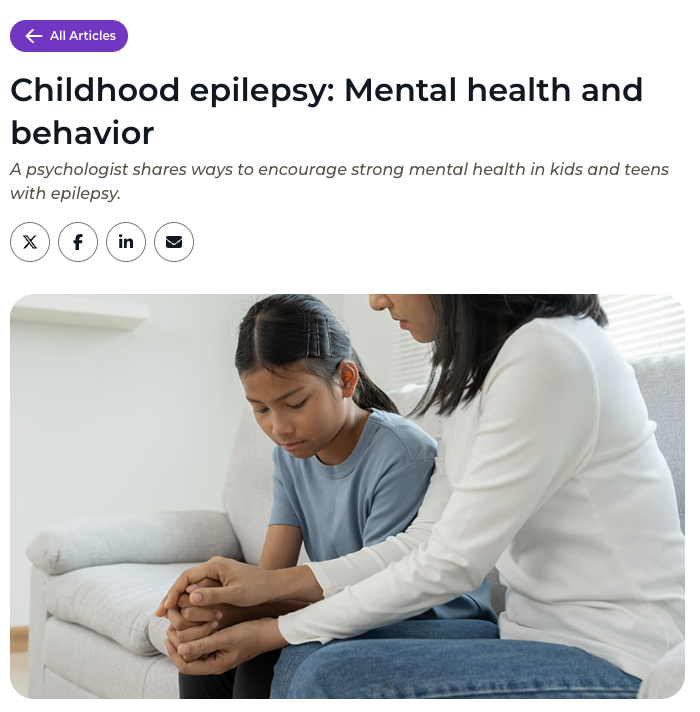
Childhood epilepsy: Mental health and behaviour
Epilepsy is a seizure disorder, not a mental health condition, but up to 60% of children with epilepsy may also experience mental health or behavioural issues like anxiety, depression, or ADHD. Dr. Hillary Kimbley, a pediatric psychologist, supports these children and their families by addressing the emotional and behavioural impacts of epilepsy, including coping with diagnosis, medication side effects, lifestyle changes, and stigma.
Click on the image to access the page – click on “Expand for more” to read a summary.
Epilepsy is a seizure disorder, not a mental health condition, but up to 60% of children with epilepsy may also experience mental health or behavioral issues like anxiety, depression, or ADHD. Dr. Hillary Kimbley, a pediatric psychologist, supports these children and their families by addressing the emotional and behavioral impacts of epilepsy, including coping with diagnosis, medication side effects, lifestyle changes, and stigma.
Warning signs of mental health concerns vary by age but can include changes in mood, behavior, sleep, eating, school performance, or social engagement. Risk factors include family history, stressful life events, medication side effects, low self-esteem, or bullying.
Treatment often involves cognitive behavioral therapy (CBT) and parent behavioral management. Diagnosing mental health issues can be challenging due to overlapping symptoms with epilepsy or medication effects, so early behavioral screenings are important.
Parents can support their child by maintaining routines, encouraging emotional expression, modeling coping skills, building a support system, and fostering independence and normalcy. Children can improve mental health by communicating concerns, maintaining healthy habits, setting goals, staying connected, and developing coping strategies.
Mental Health and Epilepsy: The Impact on Children with Epilepsy
Epilepsy is a neurological condition—not a mental illness—and does not affect a person’s intelligence. While emotional stress may trigger seizures in some individuals, mental health conditions do not cause epilepsy.
Click on the image to access the page – click on “Expand for more” to read a summary.
Stigma and Epilepsy
Stigma refers to negative judgments or labels placed on people because of differences such as health conditions. Children with epilepsy often face stigma, which may lead parents to hide the diagnosis from schools. Stigma can take two forms:
Enacted stigma (discrimination): bullying, exclusion, teasing, harassment, or even violence.
Felt stigma (internalized stigma): shame, embarrassment, loneliness, and feelings of powerlessness.
Social and Personal Impacts
Children with epilepsy may struggle with:
Making friends and social participation
Social exclusion due to fear and misunderstandings
Difficulty adjusting to new environments
Feelings of inferiority, shame, insecurity, and dependence on others
Depression and Anxiety
Children with epilepsy experience significantly higher rates of anxiety (40–50%) and depression (up to 30%) compared to their peers. Anxiety may arise from fear of unpredictable seizures or embarrassment, while depression is often under-recognized.
Signs include: clinginess, restlessness, stomachaches, negative thoughts, sleep/eating changes, panic attacks, irritability, unexplained crying, or obsessive behaviors.
Supporting Children
Effective support includes:
Creating an accepting environment
Encouraging open communication
Recognizing risk factors and symptoms
Referring to mental health services
Providing accommodations
Educating families
Promoting inclusion, kindness, self-care, and peer support programs
Bullying and Safety Concerns
Bullying is a significant problem for many children with epilepsy. Up to 20% may experience suicidal thoughts. Adults should take concerns seriously by seeking immediate help (e.g., 988), removing potential means of self-harm, listening openly, and offering support.
Other Factors Affecting Mental Health
Medications: Anti-epileptic drugs can cause fatigue, cognitive difficulties, mood changes, and sometimes increase suicidal thoughts.
Sleep deprivation: Common in epilepsy; it increases seizure risk and contributes to mood and attention problems.
Stress: Can worsen sleep, interfere with brain development, and heighten mental health challenges.
Mental Health
Studies have shown that people with epilepsy are at a greater risk of psychopathology and more likely to be socially dysfunctional than people without epilepsy.
Click on the image to access the page – click on “Expand for more” to read a summary.
Epilepsy and Psychosocial Impact
- Misconceptions & Stigma: Many people misunderstand epilepsy, leading to fear, activity restriction, lowered self-confidence, and social/occupational limitations—even if seizure-free.
- Psychological Vulnerability: People with epilepsy are at higher risk of anxiety, depression, and other psychopathologies. Key contributing factors include:
- Clinical factors (age of onset, duration)
- Medication factors (anticonvulsants/AEDs)
- Psychosocial factors (perceived stigma, social support)
- Stigma & Social Effects: Perceived stigma strongly influences social participation and self-esteem more than seizure frequency. Fear of seizures can lead to isolation.
- Depression & Anxiety: Common in epilepsy, often under-recognized, especially in children, and may manifest as irritability or disruptive behavior. Depression affects self-esteem, social interactions, and daily functioning; suicide risk is higher.
- Self-Esteem: Epilepsy often lowers self-esteem, especially in vulnerable populations. Positive coping strategies, supportive relationships, and early nurturing in children help build resilience.
- Medication Effects: Anticonvulsants can reduce cognitive function and self-esteem. Modern monotherapy with low side-effect drugs improves psychosocial outcomes.
- Stress: Both good and bad stress affect seizure threshold; managing stress through relaxation, exercise, assertiveness, and realistic goal-setting is crucial.
- Coping Strategies: Open discussion, acknowledging strengths, social support, structured routines, and professional help improve adjustment and quality of life.
- Key Fact: Perceived stigma (“felt stigma”) often affects behavior and self-perception even before any discrimination occurs.
Monitoring Mental Health in Kids with Epilepsy
Watch this video presentation about mental health and kids with epilepsy.
Supporting Mental Health in Children with Epilepsy
Watch this video about ways you can support children living with epilepsy for their mental health.
Mental Health & Childhood Epilepsy – Webinar
This is a webinar presentation by CURE Epilepsy.
